TERMINALIA GLAUCESCENS STEM EXTRACTS INDUCE AORTIC SMOOTH MUSCLE ACTIVITIES THROUGH ENDOTHELIUM-DEPENDENT AND INDEPENDENT MECHANISMS
Vasorelaxant effect of Terminalia glaucescens stem extract
DOI:
https://doi.org/10.5281/acs.v11i2.241Keywords:
Terminalia glaucescens, vasorelaxation, Rho/Rho kinase, Adrenergic receptors, Serotonergic receptors.Abstract
Introduction: Smooth muscle regulates vascular tone and blood vessel diameter. We found that ethanol stem extract of Terminalia glaucescens (ESET) relaxes phenylephrine- and potassium chloride-induced contractions of aortic smooth muscle (ASM). However, the comparative efficacy of this solvent extract with other solvent extracts of Terminalia glaucescens, the bioactive constituents, and the mechanisms responsible for this effect remain to be fully elucidated. This study investigated the effects of T. glaucescens stem extracts on the contractile mechanisms of the ASM in male Wistar rats.
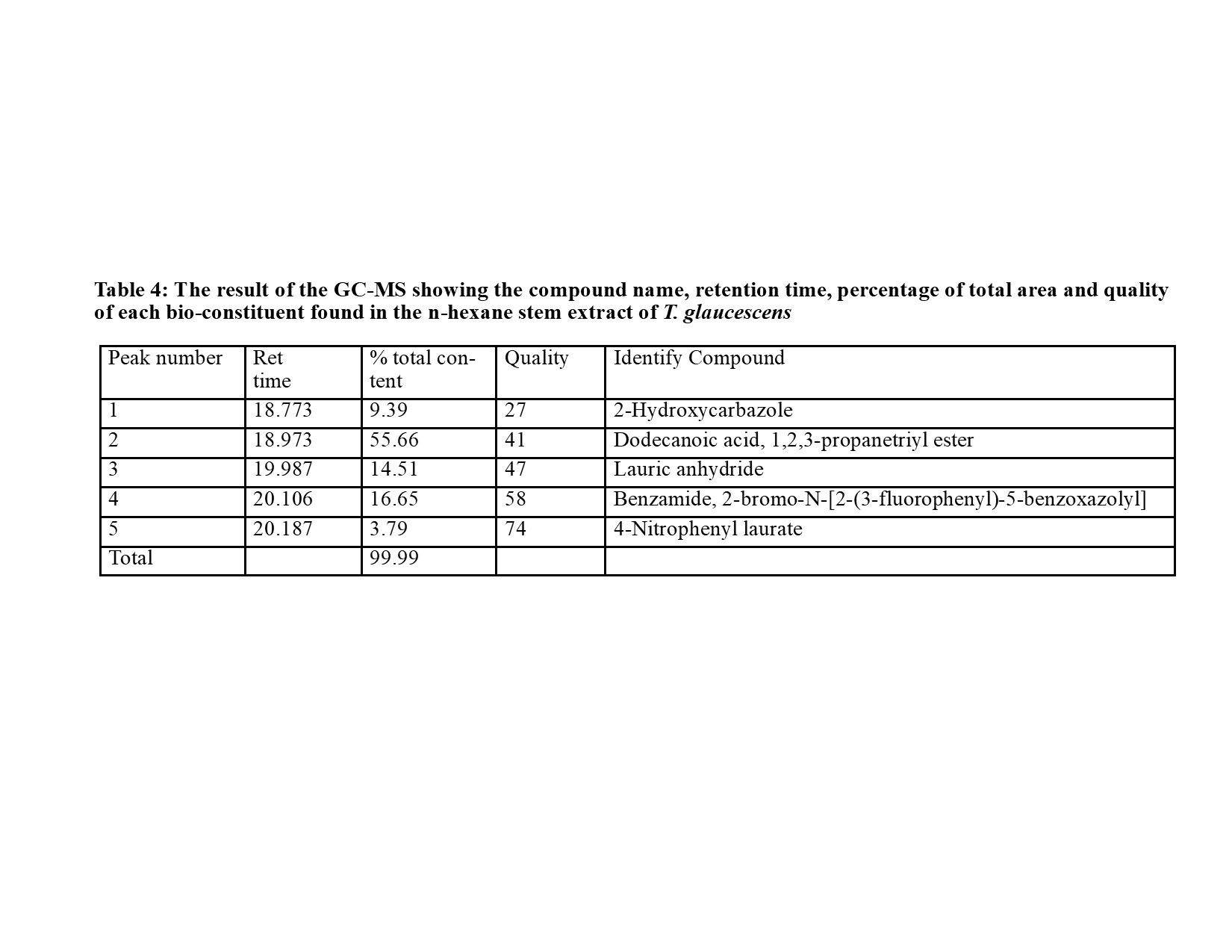
Methodology: Gas chromatography-mass spectrometry (GC-MS) was used to analyse ethanol, n-hexane, chloroform, and aqueous stem extracts of T. glaucescens. The vascular effects were assessed using isometric force transducers. Relaxation responses were measured after ASM precontraction with phenylephrine or sodium fluoride (NaF). Inhibitory effects on serotonin- and sumatriptan-induced contractions were also evaluated. Additionally, ASM relaxation after preincubation with prazosin, propranolol, or KT-5720 was examined.
Results: GC-MS analysis revealed the presence of fatty acids with vasorelaxant properties. ESET significantly relaxed (p < 0.05) phenylephrine-precontracted ASM, with reduced maximal relaxation in NaF-precontracted ASM. ESET also inhibited serotonin-induced contractions. Adrenergic blockade had no significant effect (p>0.05), while KT-5720 significantly reduced relaxation only in endothelium-denuded ASM.
Conclusion: ESET's vasorelaxation effect on ASM is mediated, in part, through endothelium-dependent mechanisms. It also possesses endothelium-independent mechanisms, potentially mediated by G-protein downstream signaling, and it also inhibited serotonin-induced contraction. These mechanisms are independent of β-adrenergic/cAMP signalling. Its phytochemical constituents likely augment these observed effects, underscoring T. glaucescens as a potential source of vascular-active compounds for cardiovascular therapy.