MORINGA OLEIFERA MITIGATES JEJUNAL MUSCARINIC, HISTAMINERGIC, AND ION CHANNEL DYSFUNCTION INDUCED BY CRUDE OIL-CONTAMINATED WATER
Moringa oleifera Attenuates Crude Oil-Induced Jejunal Dysfunction
DOI:
https://doi.org/10.5281/acs.v11i1.233Keywords:
Moringa oleifera, crude oil-contaminated water, jejunal contraction, antioxidant activities, muscarinic receptors, Moringa oleifera, crude oil-contaminated water, jejunal contraction, antioxidant activities, muscarinic receptorsAbstract
Background: Crude oil ingestion has been reported to induce oxidative stress and impair gastrointestinal function. Moringa oleifera (MO), rich in vitamin C, polyphenols, and other antioxidant phytochemicals, may provide protective effects. This study evaluated the impact of crude oil-contaminated water (CCW) ingestion and MO supplementation on jejunal smooth muscle contractility in male Wistar rats.
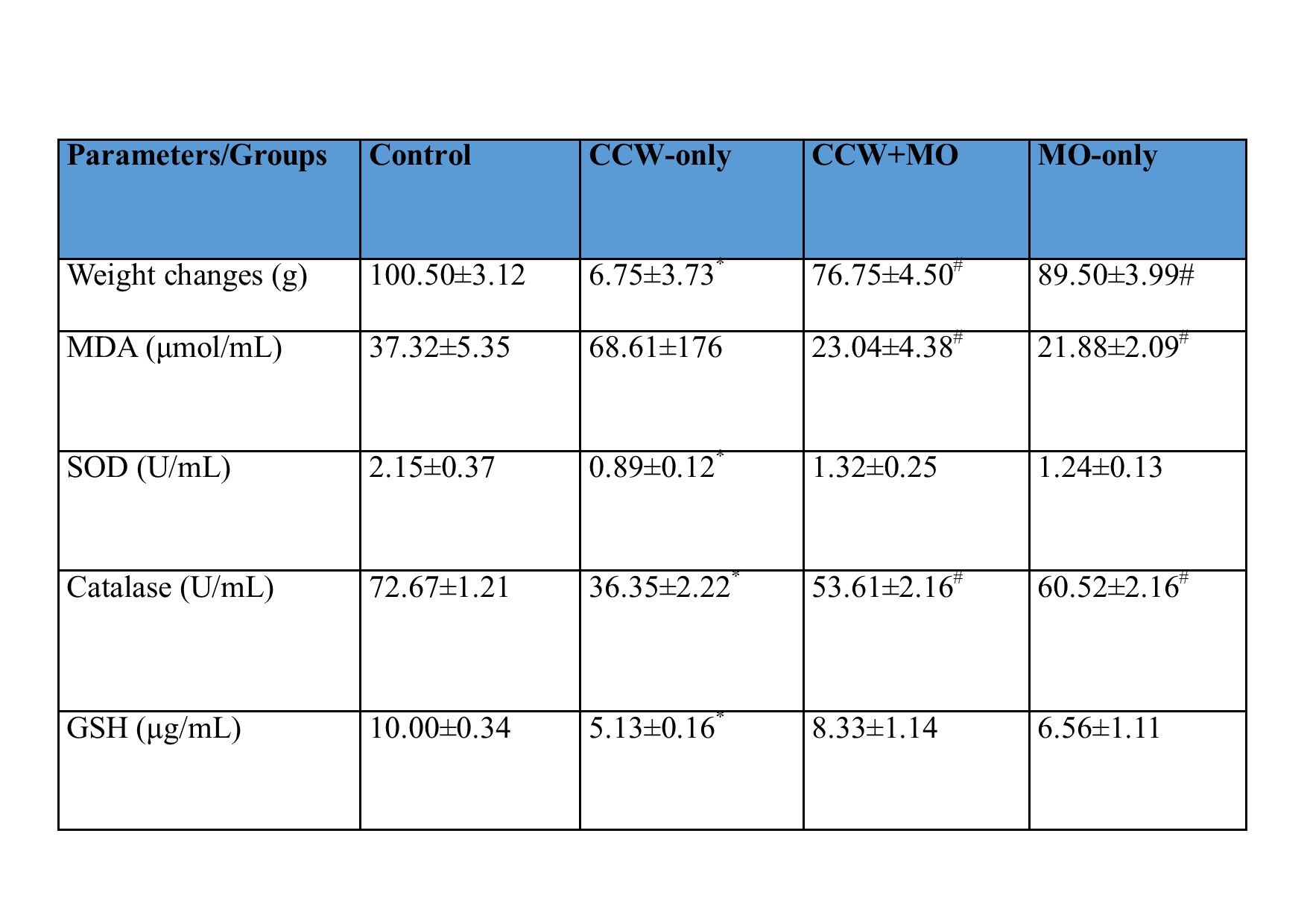
Methodology: Adult rats (200–250 g) were randomised into four treatment groups: control, CCW-only (2.5 mL crude water), CCW+MO (2.5 mL crude water+250 mg/kg MO), and MO-only (250 mg/kg MO). Jejunal tissues were excised for isometric tension studies, with contractile responses assessed using calcium chloride (CaCl₂), potassium chloride (KCl), histamine, and acetylcholine (ACh). To identify underlying pathways, jejunal tissues were preincubated with atropine, nifedipine, glibenclamide, barium chloride, indomethacin, and L-NAME. Oxidative stress indices, including malondialdehyde (MDA), superoxide dismutase (SOD), catalase, and glutathione (GSH), were quantified.
Results: CCW ingestion significantly (p<0.05) elevated MDA while reducing SOD, catalase, and GSH activities. Functionally, CCW suppressed CaCl₂- and histamine-induced contractions but exaggerated KCl- and ACh-evoked responses, suggesting dysregulation of ion channels and muscarinic receptor signalling. Atropine and nifedipine markedly attenuated ACh responses in CCW tissues, implicating M2/M3 muscarinic receptors and L-type calcium channels in CCW-mediated dysfunction. In contrast, MO supplementation restored antioxidant enzyme activity, reduced MDA, and normalised jejunal responses to most agonists and reversed the effects of key blockers.
Conclusion: CCW impairs jejunal contractility through oxidative stress–mediated disruption of muscarinic, histaminergic, L-type calcium, and ATP-sensitive K⁺ channel pathways. MO supplementation provides antioxidant and smooth-muscle-protective effects, underscoring its therapeutic potential in mitigating crude oil–induced gastrointestinal toxicity.