MOBILE PHONE-BASED TRACKING OF BREAST CANCER PATIENTS TO REDUCE LOSS TO FOLLOW-UP IN NIGERIA: A PROSPECTIVE COHORT STUDY
The use of Mobile Technology in addressing challenges of Loss to Follow-Up and Strengthening Care Delivery amongst Breast Cancer Patients in Nigeria
DOI:
https://doi.org/10.5281/acs.v11i2.258Keywords:
Patient tracking, Breast Cancer, Follow-up Care, Mobile TechnologyAbstract
Background: Breast cancer (BC) management in low- and middle-income countries (LMICs) extends beyond early diagnosis to effective post-treatment care and follow-up. In Nigeria, many patients are lost to follow-up within a few years after diagnosis, limiting continuity of care and long-term outcome assessment. With the increasing penetration of mobile technology, mobile-based tracking offers a promising approach to improve patient monitoring, explore AI integration and strengthen healthcare delivery in Nigeria. This study explores mobile technology as a follow-up tool for BC patients in Nigeria and evaluates demographic and clinical factors that may influence successful mobile telephone tracking. Its findings are intended to inform scalable strategies for improving post-treatment cancer care in resource-limited settings such as Nigeria, by leveraging mobile technology, while considering the practical insights identified in this study.
Methodology: This study included BC patients diagnosed between 31st January 2019 to 31st December 2021 and followed up to 2025. Eligible patients (≥18 years) had histologically confirmed disease and received treatment within the study period. Patient tracking was conducted via structured phone calls using registered SIM cards.
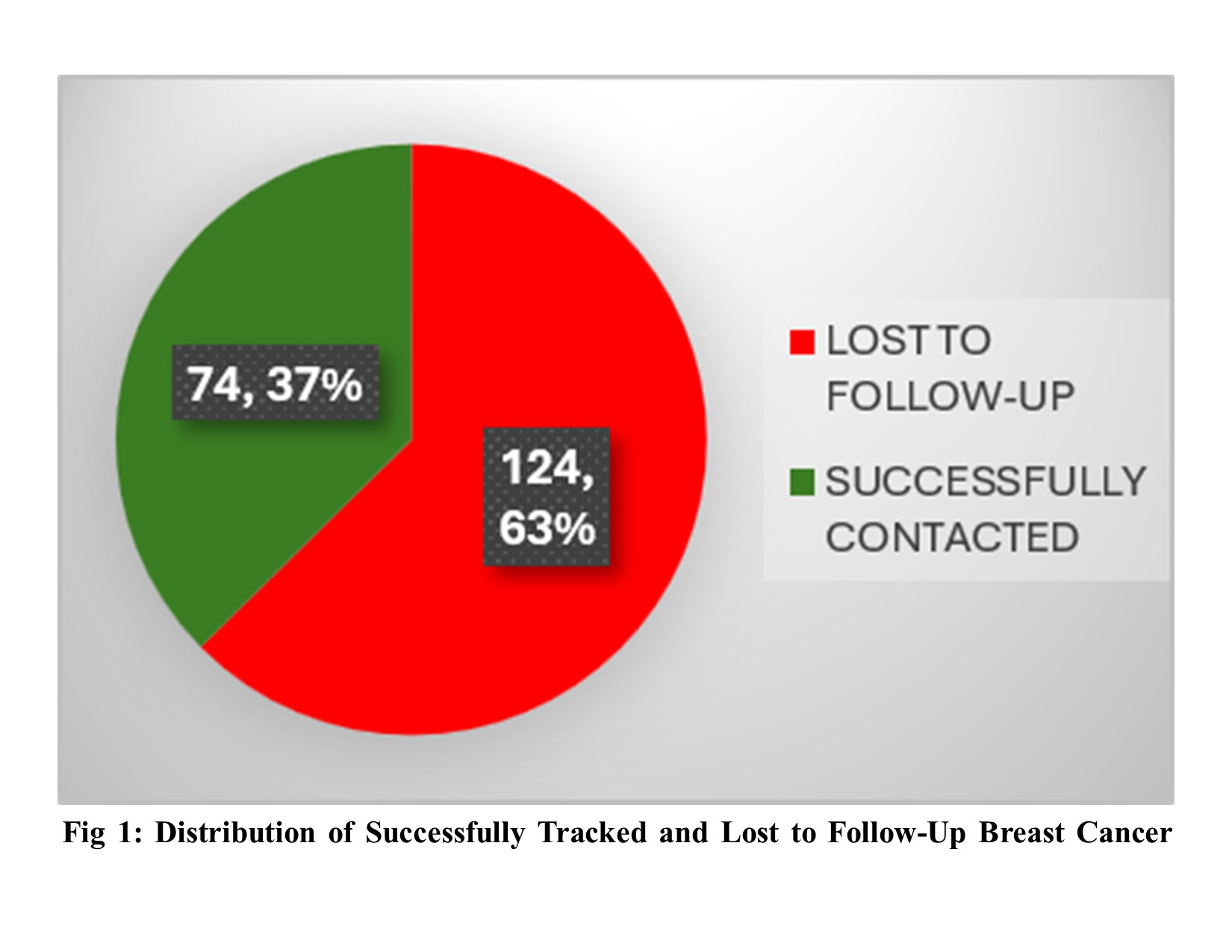
Results: Data from 198 patients were analysed; 58(29.3%) were confirmed alive, 90(45.5%) were unreachable, and 13(6.6%) were deceased. Tracking success was lowest among patients 18–40 years (25.8%), and patients with late-stage disease; stage IV disease having the highest proportion of lost to follow-up (82%). Triple-negative breast cancer was the most common molecular subtype (n = 94), with 62.8% lost to follow-up. Invasive ductal carcinoma accounted for 98% of cases.
Conclusion: Even though mobile-phone tracking offers a potential strategy to ensure effective patient follow-up, connectivity issues and inaccurate phone numbers pose challenges; therefore, strengthening contact verification, collecting multiple phone numbers, and establishing structured follow-up systems are critical in LMIC settings.